
Sermon Summary
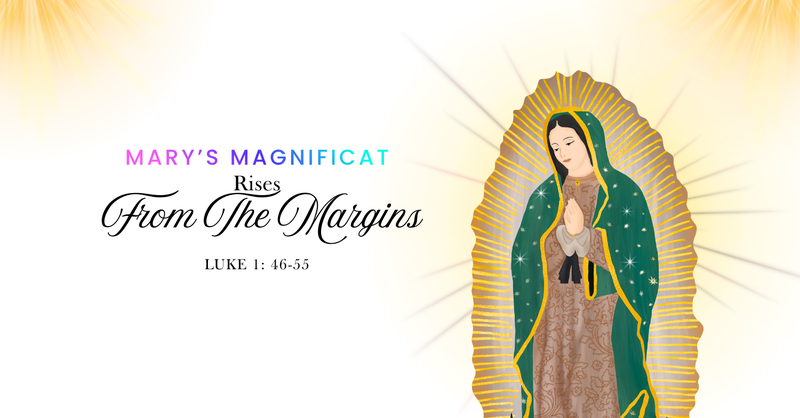
Mary’s Magnificat rises from the margins with courage and clarity. It names a God who remembers the lowly, topples proud systems, and fills the hungry with good things. That same divine reversal threads through the story of Our Lady of Guadalupe—a brown-skinned mother who speaks in the language of the overlooked and stands beside an indigenous man, not in the halls of power. The witness is unmistakable: God draws near to the weary, the fearful, the immigrant, the outcast. The biblical command to welcome the stranger is not conditioned by paperwork, risk assessments, or political convenience. It is a holy calling that refuses to wait for the empire’s permission.
Against the fear that stalks immigrant homes, detention centers, and families living under the threat of separation, this hope refuses to be silenced. It insists that the church is called to do the welcoming, not because it is easy, but because it is holy. The reflection honors Mary’s role with nuance: not as an object of worship, but as a mother given at the cross, a companion in prayer, and a model of courageous consent who said “yes” to God. The invitation is to lift up Mary more, to see how her “yes” dignifies women’s leadership and confronts the quiet ways churches sideline female voices.
Personal memory opens a window into belonging and beauty—the handcrafted tilma, roses falling, and the sacred artistry that forms a people. Moving from a cultural bubble to a wider diversity reveals the gift of letting people see God in the image that sustains hope. Across cultures and centuries, Mary appears in the face of the people she visits, teaching the church to honor the whole person rather than fixate on differences. The call is practical and tender: be motherly toward one another. Comfort those who are down. Feed those who are hungry. Let lament deepen compassion; let compassion become courage; and let courage build a safe, sacred welcome for all who seek refuge.
Key Takeaways
- 1. Mary’s song overturns fearful systems. Mary’s Magnificat is not domesticated piety; it is resistance shaped as praise. It announces God’s solidarity with the lowly and God’s judgment on prideful power. When worship names injustice and hope together, it becomes a school of courage. [00:51]
- 2. Love the stranger without caveats. Scripture’s command does not wait for the empire’s permission. Compassion is not contingent on documentation, risk-free outcomes, or political safety. Obedience to God’s hospitality means dignifying lives even when the law hesitates. [03:06]
- 3. Honor Mary as a courageous companion. Mary is not worshiped but lifted up as mother, intercessor, and model of holy consent. Her “yes” challenges the church to recognize and support women’s callings. Reverence for Mary sharpens attention to the voices still being sidelined. [05:56]
- 4. See God in every culture’s face. Guadalupe’s appearances teach holy inculturation: God speaks in the language and skin of the people. Allowing communities to imagine God in familiar forms preserves their hope and dignity. This practice heals division by honoring the whole person. [10:35]
- 5. Lament that matures into a brave welcome. Grief over detention, deportation, and separation must not end in despair. Lament can ripen into compassion, and compassion into concrete courage. The church’s vocation is to build safe, sacred spaces where the vulnerable are received as kin. [12:20]
YouTube Chapters
- [00:00] - Welcome
- [00:51] - Mary’s Magnificat from the margins
- [01:50] - Guadalupe appears to the overlooked
- [02:11] - Comfort for immigrants and outcasts
- [03:06] - Compassion that ignores legal caveats
- [03:43] - The unqualified call to love strangers
- [04:05] - Lament and hope for the vulnerable
- [04:43] - Church called to a holy welcome
- [05:56] - Honoring Mary without worship
- [06:58] - A woman’s yes and women in ministry
- [07:43] - A handcrafted tilma and belonging
- [09:53] - From cultural bubble to wider diversity
- [10:35] - Seeing God in every culture
- [11:41] - A motherly posture of care
- [12:20] - From lament to courage to welcome

