Honoring the Women Who Have Shaped Us

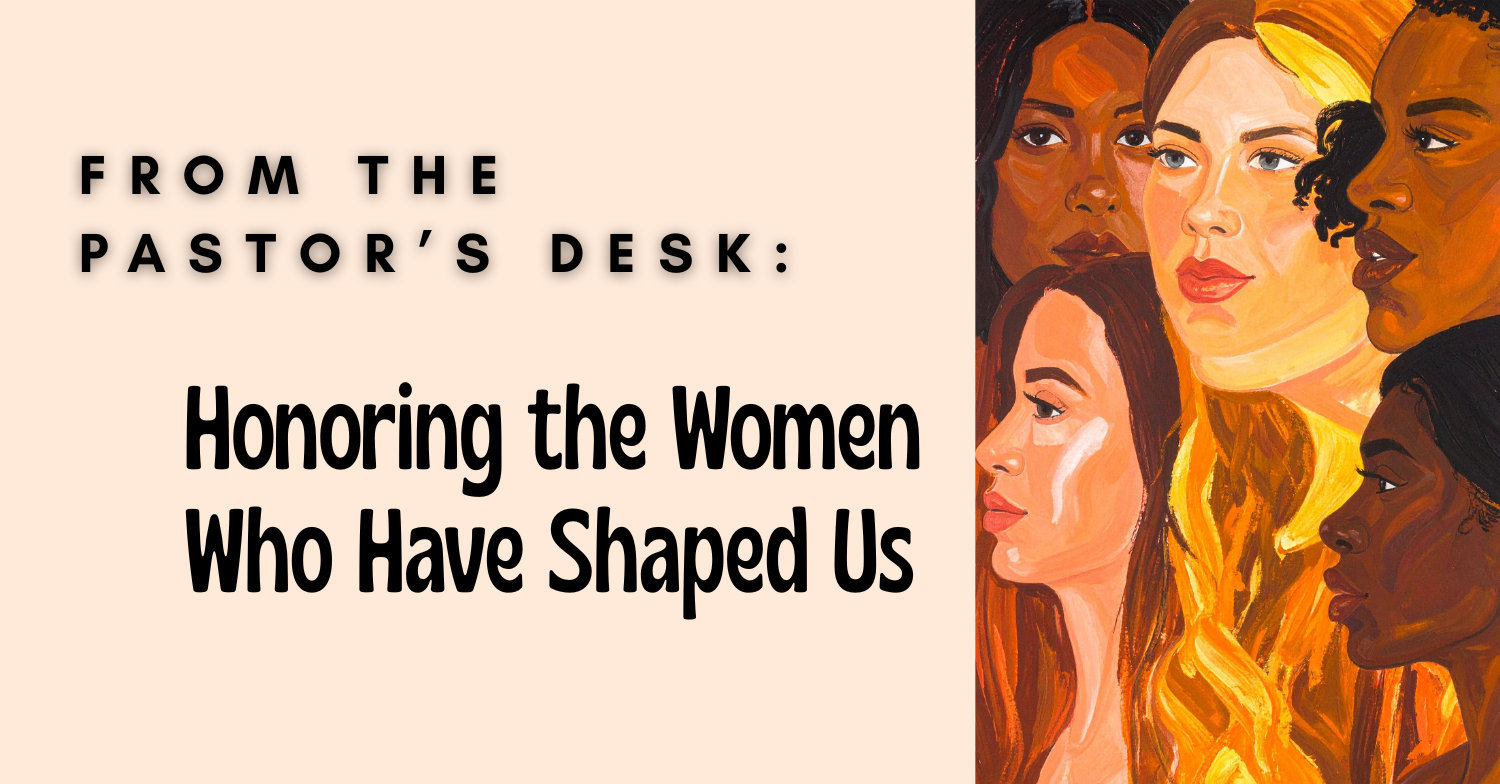
March brings us Women's History Month, a time to remember not just the women in textbooks and movements, but also those whose quiet, steady presence has shaped our lives.
When I think about the women who shaped me, I start with my birth-great-grandmother. She was the first protector I can remember having—there was no place she was not, no corner of my life where her presence was absent. Even as an adult, after reuniting with my birth family, people in town still seemed to know that if they saw her, I would be there too. I cherished the quiet moments sitting with her in our tiny living room, listening to thunderstorms rumble across the sky, or watching her on the porch as I ran about the yard and climbed trees. I remember when we went to bed: I would turn on the light, grab my St. Martin de Porres glow-in-the-dark figure, jump onto our high bed, and hold the figurine close to the light. After a few moments, I would carefully return it to the dresser as she turned off the light, watching it glow in the dark while I lay by the window, feeling the evening breeze drift into the room. Those nights were simple, sacred, and full of the quiet assurance of her presence.
I also think of my mother, her sacrifices, her protective love, and her determination to give her children what she may not have had. Though she was my adoptive mother, she always reassured me that she loved me as if I were of her own flesh and blood. She was strict, but her love never wavered, lasting until the very end when she worried about our future. I remember telling her she had done her best, and it was time for her to rest. So much of who we are comes from women who never give up.
Scripture also tells us about women whose stories are more complex than the Church has sometimes shown. I think of Hagar. In Genesis 16 and 21, she is used, cast out, and sent into the wilderness with her child by Abraham and Sarah. She has no power, no status, and no protection. Yet in the wilderness, God sees her. Hagar is the only person in Scripture to give God a name: El Roi, meaning “the God who sees me.”
Genesis 16:13 tells us: “So she named the Lord who spoke to her, ‘You are the God who sees me.’”
In a world that discarded her, God saw her.
I also think of Mary, the mother of Jesus. Her courage, faith, and devotion are remarkable. She accepted a calling that was both miraculous and risky, trusting God even when others might have judged her. Mary shows the steadfastness and love we see in mothers and grandmothers through the generations. She reminds us that women carry God’s work and hope with strength and humility.
I think of Mary Magdalene, too. For centuries, she has been given a reputation that Scripture never gave her. The text does not call her immoral. It tells us she was healed, followed Jesus faithfully, stood near the cross when many fled, and was the first to witness the resurrection. Yet tradition often turned her into a cautionary tale rather than honoring her as an Apostle to the Apostles. While Scripture does not name her in the story of the woman accused, I remember how Jesus refused to let a woman be publicly shamed and executed. In the Gospel of John 8:7, Jesus says, “Let anyone among you who is without sin be the first to throw a stone.” He interrupts systems that weaponize morality against women.
The Church Universal has not always fully lifted up women. The Catholic Church continues to bar women from its highest ordained offices. Many Protestant traditions, while ordaining women, often fail to honor figures like Mary, the mother of Jesus, or Mary Magdalene as deeply as they deserve. Too often, women in Scripture are reduced to warnings instead of witnesses, temptations instead of theologians, footnotes instead of foundations.
But imagine if we told the truth about them.
Imagine if Hagar were preached as the theologian who named God.
Imagine if Mary, the mother of Jesus, were consistently honored as a model of faith, courage, and maternal love.
Imagine if Mary Magdalene were recognized as the first preacher of resurrection.
Imagine if women were not moral object lessons but moral leaders.
Perhaps when we lift women up, not just in part or as symbols, but fully, the world itself begins to soften. It becomes warmer, more just, and more like the God who sees.
This month, I give thanks for my great-grandmother. For my mother. For Hagar in the wilderness. For Mary at the annunciation and at the cross. For Mary Magdalene at the tomb. For every woman who has endured systems not built for her and still found a way to rise.
May we become a Church that does not merely celebrate women one month a year, but embodies the Gospel that dignifies them every day.
And may we remember the promise of Galatians 3:28:
“There is no longer Jew or Greek, there is no longer slave or free, there is no longer male and female; for all of you are one in Christ Jesus.”
May we live as if that were true.

-
Location